Glass Lifting Cranes Built for Tight Access
Glass lifting cranes handle the lift with no second chances. One knock on an edge and a custom panel worth thousands is scrap, the install date slips, and someone has to explain it to the client. That’s why the crane you pick for a glass job matters as much as the crew running it.
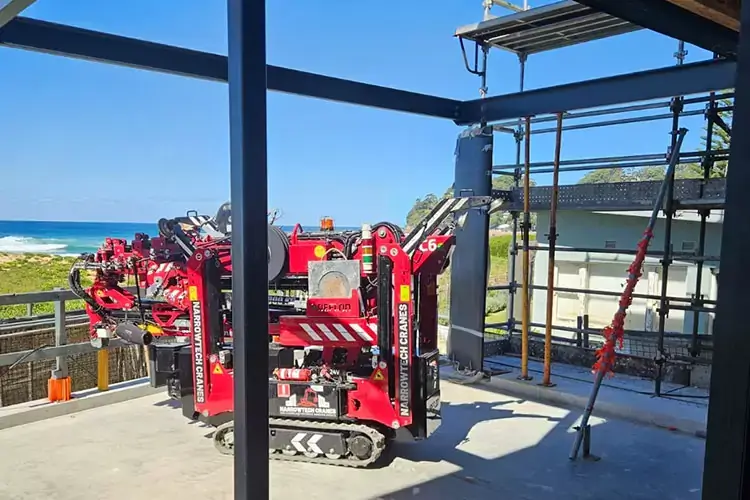
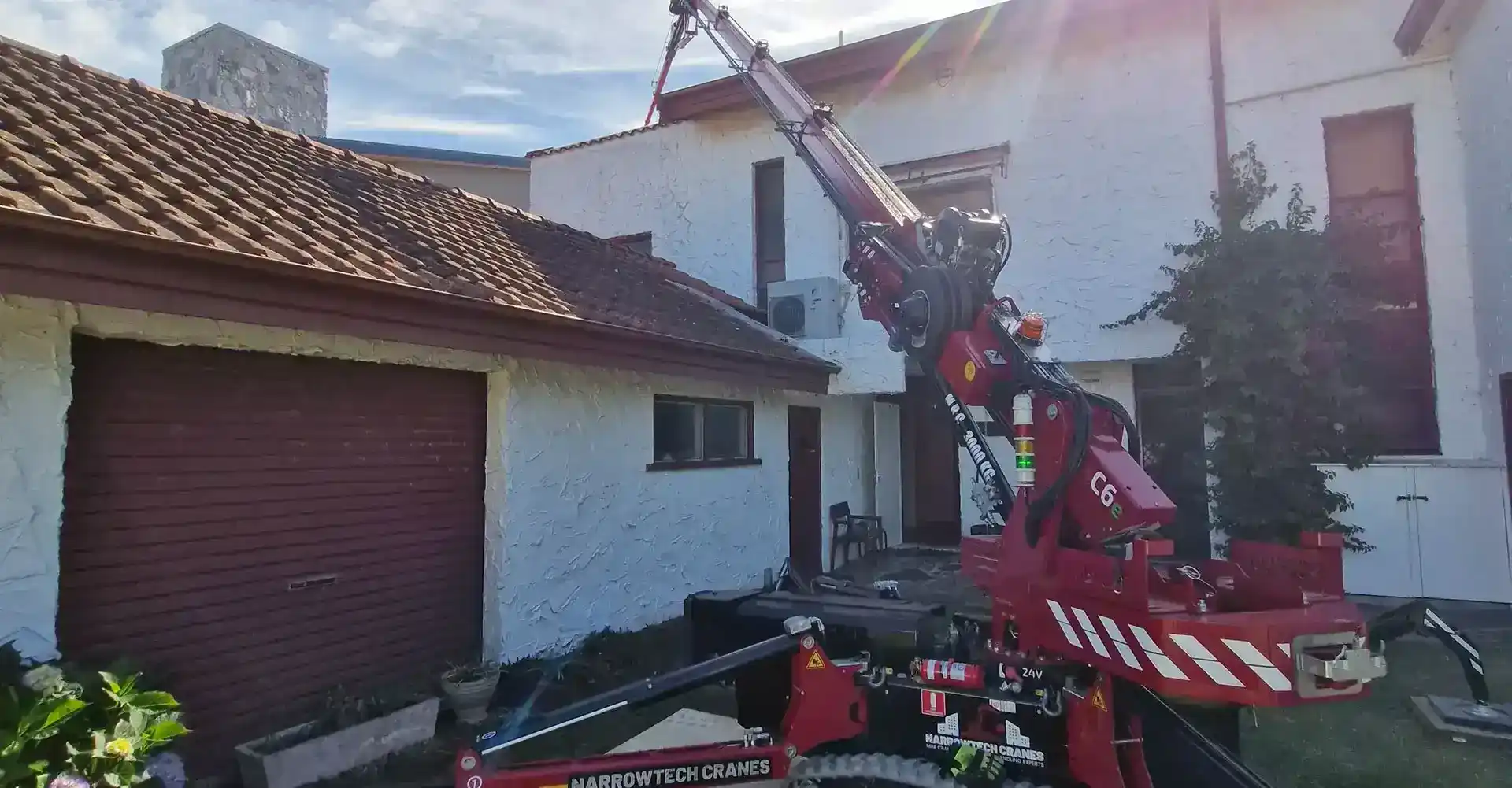
At Narrowtech Cranes we run a focused fleet of glass lifting cranes chosen for exactly this kind of work: compact, electric, non-marking mini cranes paired with vacuum lifting attachments. They get through a 750mm doorway, track across finished floors without leaving a mark, and place heavy panels smoothly and accurately in courtyards, stairwells, balconies and rooftops where a truck crane can’t even set up.
Based in Erina, we supply glass lifting cranes on wet or dry hire across the Central Coast, Newcastle and Sydney.
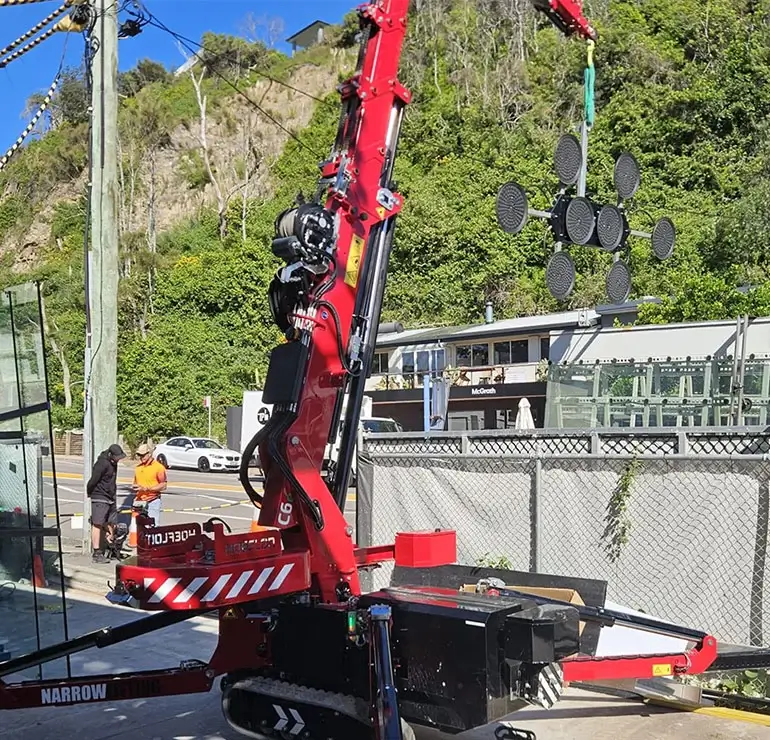

Why the Crane Choice Makes or Breaks a Glass Install
Most cranes are built to lift heavy things. Glass needs more than that. It needs slow, precise control in the last few hundred millimetres, a stable base on uneven or finished ground, and enough reach to land the panel square to its frame without anyone grabbing the edges.
A conventional truck crane can lift the weight easily, but on a lot of residential and boutique commercial sites it simply can’t get close enough. It needs road space, a solid pad, room for outriggers and often a traffic management plan. Once it’s parked on the street, it’s lifting over the house, the neighbours and the power lines to reach a courtyard at the back.
A mini crane flips that around. It drives to the lift point, sets up in a footprint not much bigger than a doorway, and works close to the glass instead of from the far side of the property. Shorter reach, better control, less risk.
Our Glass Lifting Crane Fleet
Every machine in our fleet earns its spot. Here’s what we bring to glass jobs and where each one fits.
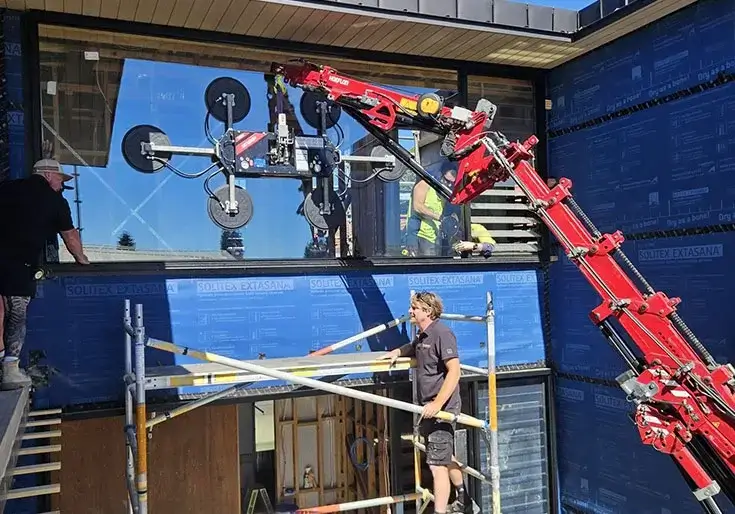
Hoeflon C6e Mini Spider Crane (3 Tonne)
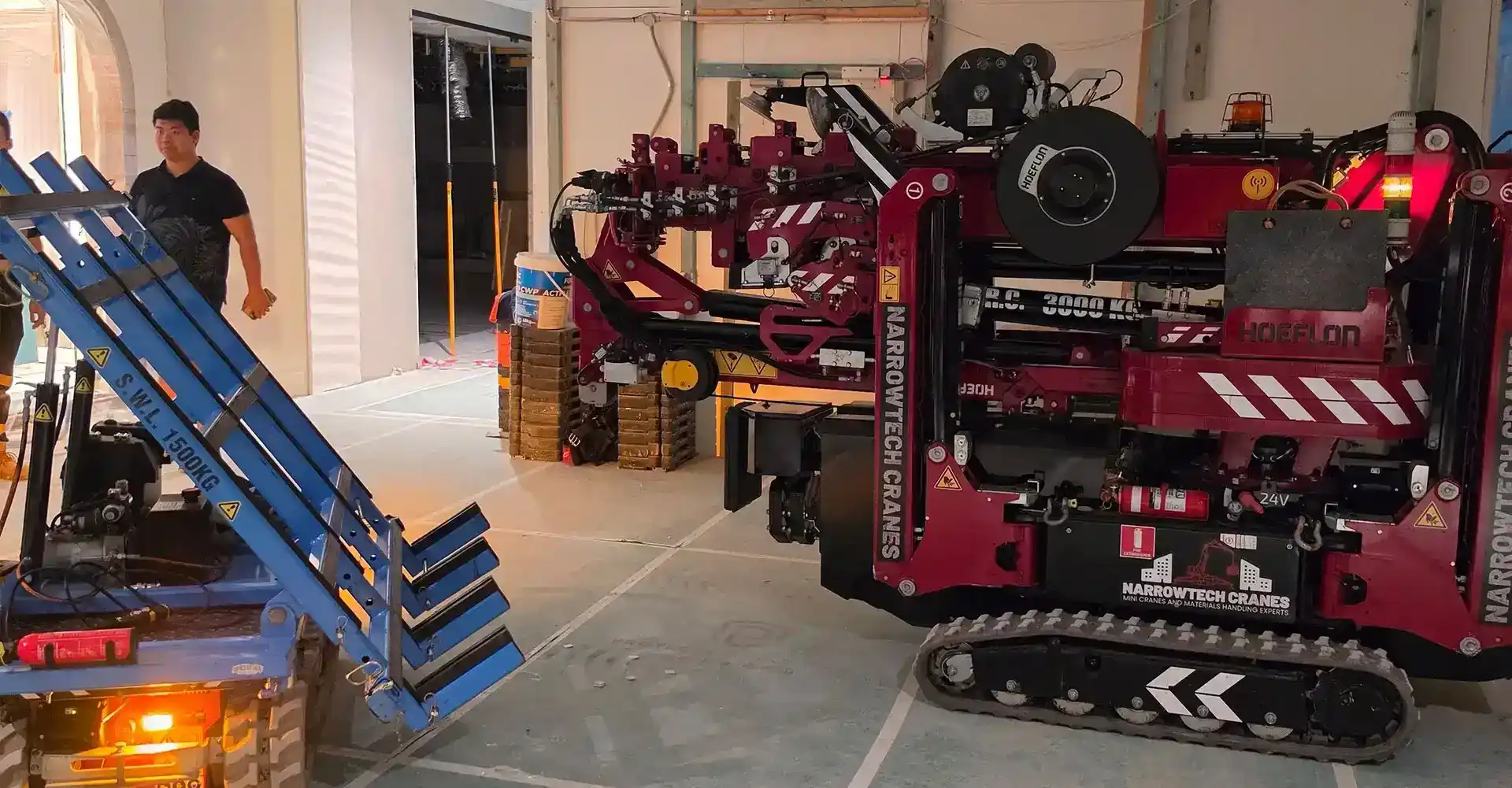
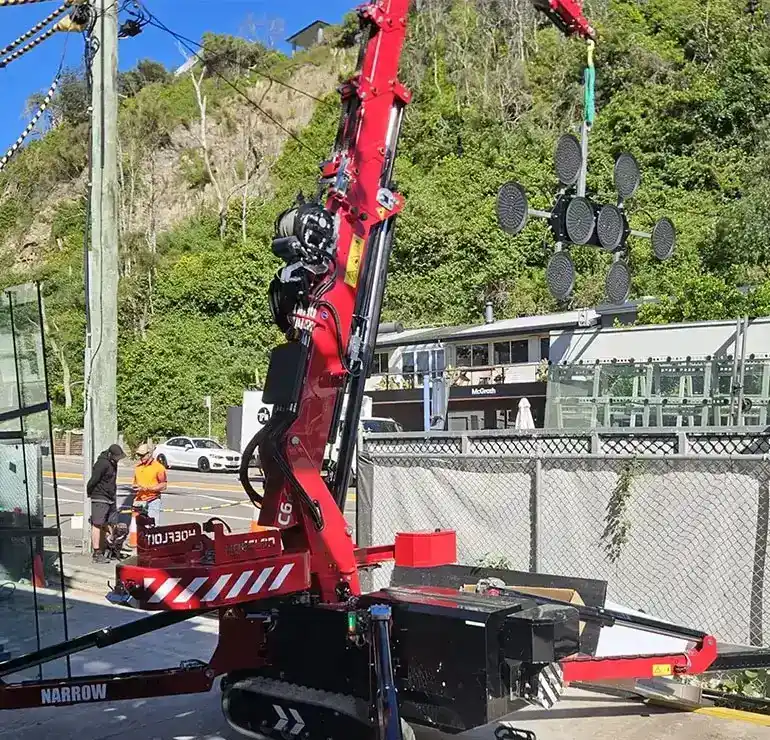
The C6e is our go-to glass lifting crane and the machine behind most of the tricky installs you’ll see on our socials. It’s fully electric, runs on non-marking rubber tracks, and folds down small enough to fit through standard doorways and down side passages. Once it’s set up on its outriggers, it gives the operator fine control over every movement, which is exactly what you want when a 300kg panel has millimetres to spare on each side.
Because it produces zero emissions on site, the C6e can work indoors, in basements and inside occupied buildings where a diesel machine wouldn’t be approved.
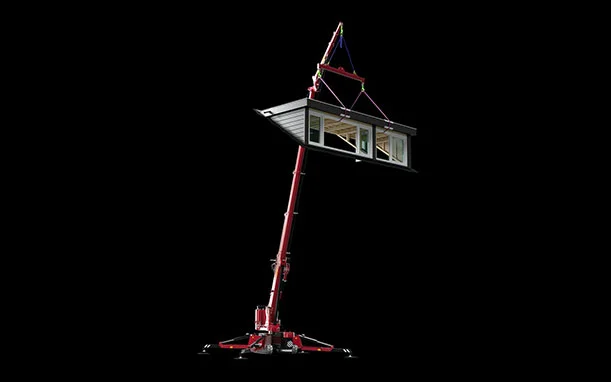
C10e Mini Crane (4 Tonne)
When the panels get bigger or the reach gets longer, the C10e steps up. It keeps the electric drive and the compact footprint but adds extra capacity for larger glazing units, heavier insulated glass and longer-radius lifts. Available on wet hire with one of our operators.
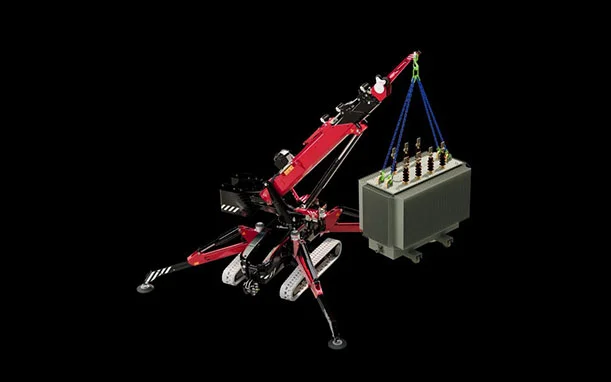
C30 Crane (9 Tonne)
For bigger glass packages, longer reaches or combined glass and steel days, the C30 gives us serious capacity while still fitting into sites that would be a squeeze for a standard mobile crane. Available on wet hire.
Maeda 285 and Maeda 305
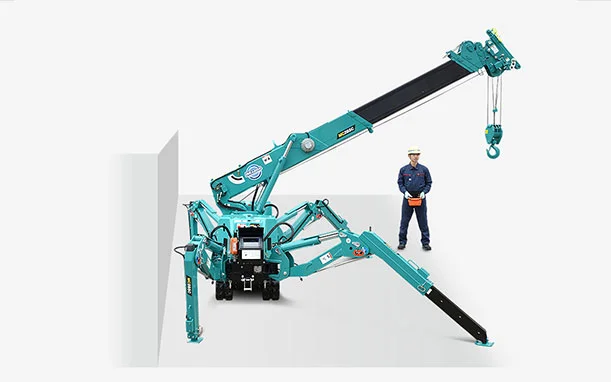
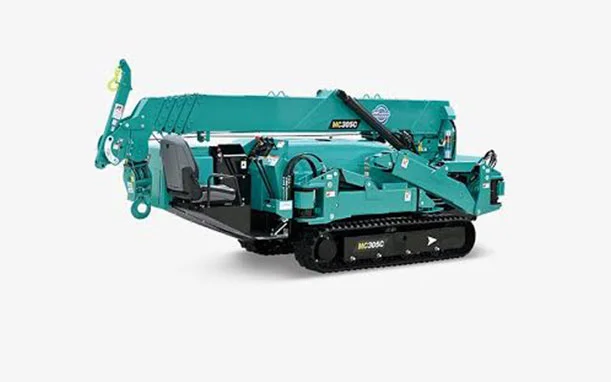
Our Maeda mini crawler cranes are proven, versatile machines that suit a wide range of lifting jobs, including glass handling with the right attachment. Both are available on wet or dry hire, so ticketed crews who know their way around compact cranes can take them on their own terms.
Glass Vacuum Lifter Attachment
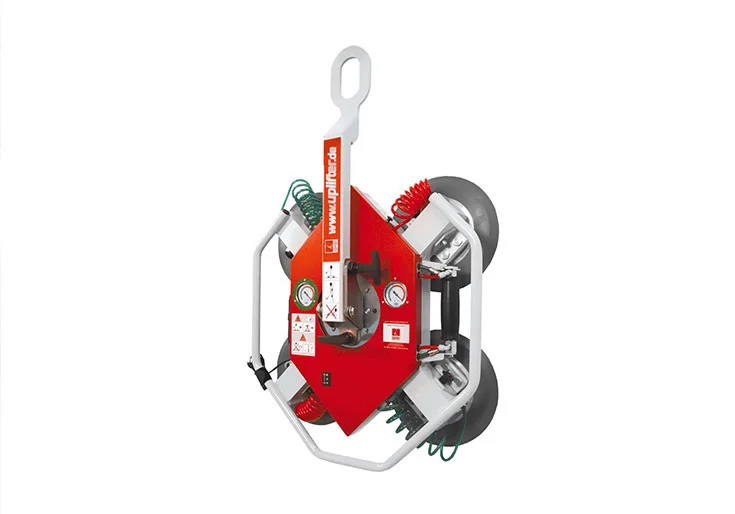
The crane is only half of a glass lifting setup. The vacuum lifter is what actually holds the panel. Our vacuum lifting attachment grips the glass face through sealed suction pads, so nobody needs to touch the edges and the panel can be rotated and tilted into position under full control. It’s available with our cranes or as an equipment hire item.
TC1 Track Load Carrier
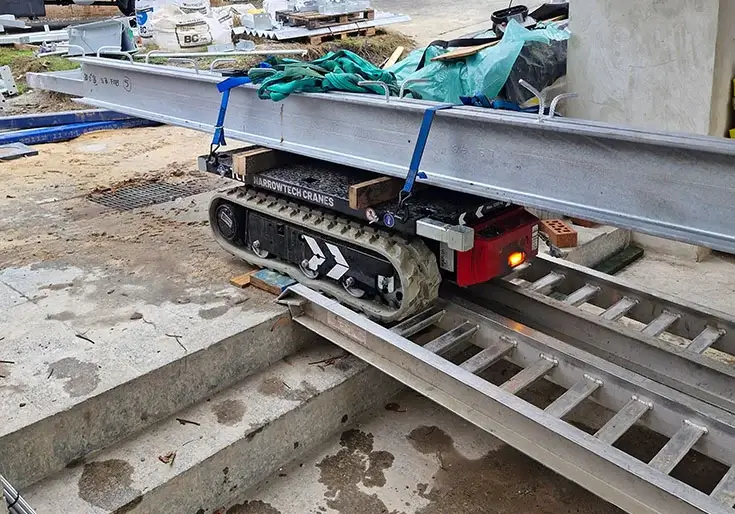
Sometimes the hardest part of a glass job is getting the panel from the delivery truck to the crane. The TC1 track load carrier moves heavy loads across lawns, paths and narrow side access without the two-person carry that puts edges and backs at risk.
Why Mini Cranes Suit Glass Better Than Most Alternatives
Plenty of glass still goes in by hand, on suction cups and a lot of muscle. That works for small panels. Once you’re dealing with large sliders, structural glazing or overhead glass, it becomes a safety problem and a quality problem. Here’s what a dedicated glass lifting crane brings instead:
- Precise placement: proportional controls let the operator creep the panel into its frame, so edges, seals and hardware aren’t forced
- No manual handling: the vacuum lifter takes the weight, so your glaziers guide the panel instead of carrying it
- Access where trucks can’t go: through doorways, down hallways, onto balconies and into basements
- Non-marking tracks: polished concrete, timber floors, tiles and fresh driveways stay as the trades left them
- Indoor approval: all-electric drive means no fumes and low noise inside occupied or finished buildings
- Smaller setup: no road closure in most cases and far less disruption for neighbours
Where Our Glass Lifting Cranes Work Best
We see the same types of glass work again and again, and our cranes are set up to handle all of them:
- Large sliding and stacking doors in coastal and luxury homes
- Frameless balustrades on balconies, decks and stairwells
- Skylights and roof glazing, including jobs near overhead power lines
- Structural glazing and feature walls in boutique commercial builds
- Shopfronts and internal glass partitions in commercial fitouts
- Frameless pool fencing in backyards with no machine access
- Oversized mirrors and feature panels inside finished homes
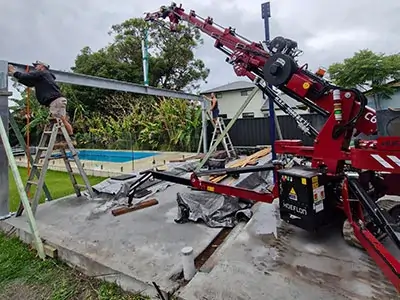
One recent job involved a skylight weighing over 300kg, power lines overhead and next to no room to move. With the right crane and a clear plan, it went in cleanly. That’s the kind of lift our fleet is built for.
Electric, Quiet and Approved for Indoor Work
A lot of glass goes in at the end of a build, when the floors are polished, the walls are painted and the client might already be living there. Bringing a diesel machine inside at that stage isn’t an option.
Our electric glass lifting cranes solve that problem. They produce no exhaust, run quietly enough for occupied homes and offices, and roll across finished surfaces on non-marking rubber tracks. That makes them a natural fit for:
- Internal glass partitions and office fitouts
- Basement and carpark installs with limited ventilation
- Heritage and terrace renovations with tight access behind the facade
- Occupied homes where noise and mess need to stay low
For builders, it means the glass can go in when it suits the program, not just before the finishes are done. For clients, it means a crane can work in their home without them noticing much more than the new glass at the end of the day.
Wet Hire or Dry Hire Glass Lifting Cranes
You can take our cranes in the way that suits your crew and your program.
Wet Hire
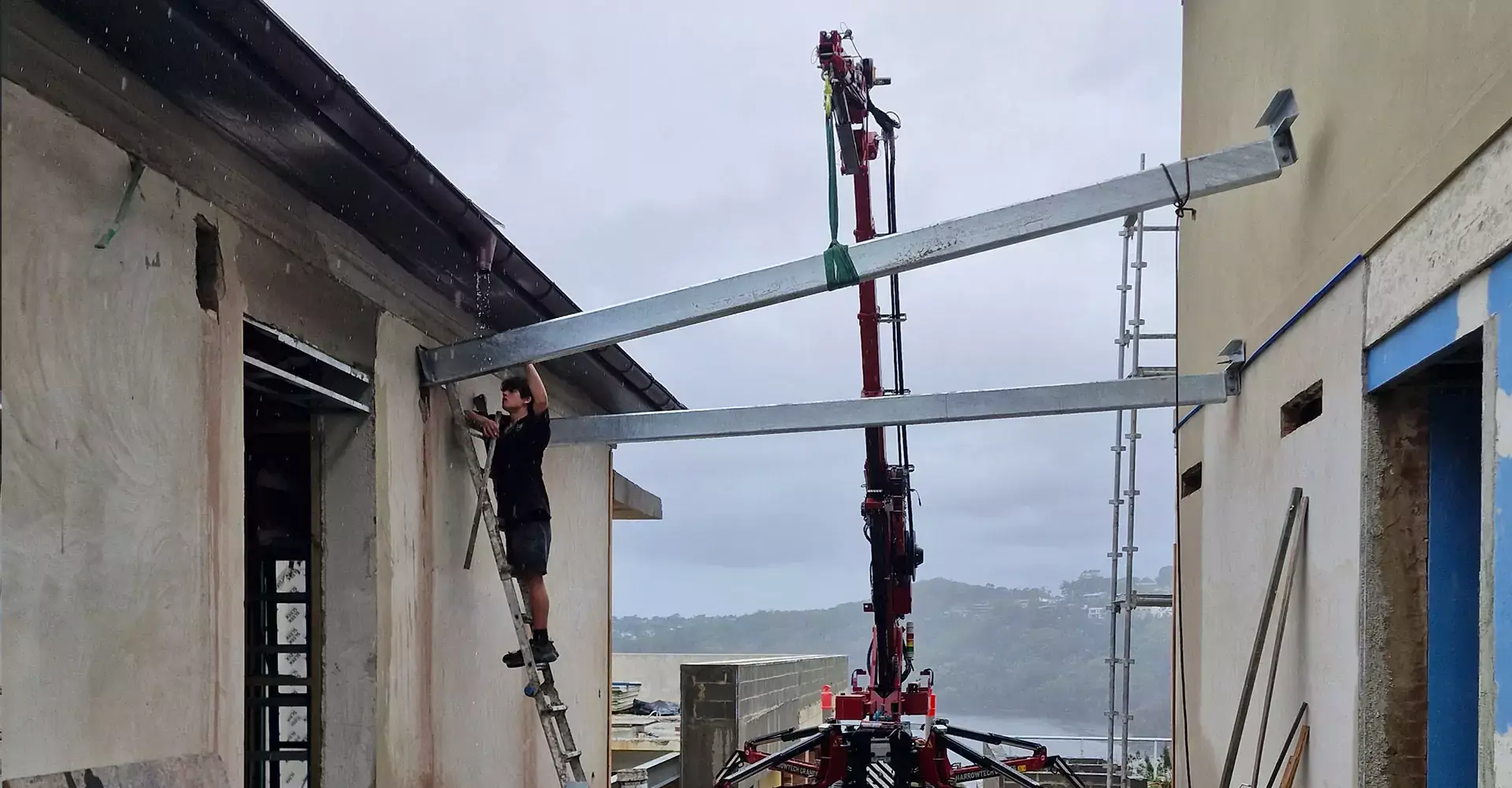
Crane, vacuum lifter and certified operator together. Our team runs the lift end to end while your glaziers focus on fixing and sealing. This is the right call when the geometry is unforgiving, the panels are heavy or expensive, or your crew hasn’t run tight-access gear before.
Dry Hire
Selected machines, including our Maeda cranes, are available on dry hire for ticketed crews who already know compact lifting equipment and want flexibility on site. We’ll walk you through the machine and make sure the setup suits the job before it leaves the yard.
Matching the Crane to the Panel
Choosing the right glass lifting crane comes down to a handful of details. If you can send us these when you call, we can recommend the right setup quickly:
- Panel weight and dimensions, including the heaviest single unit
- Install height and the distance from where the crane can set up
- Access path from the street, including the narrowest doorway or gate
- Ground conditions and finishes the crane will travel over
- Any overhead hazards such as power lines, eaves or trees
- Whether the work is indoors, outdoors or both
From there we’ll match the crane, the vacuum lifter and the crew to the job, so nothing turns up undersized or oversized on the day.
Glass Lifting Cranes Across the Central Coast, Newcastle and Sydney
Our yard is in Erina on the Central Coast, but our glass lifting cranes work right across NSW. We regularly lift on sites throughout the Central Coast, Newcastle, Lake Macquarie, Maitland, Port Stephens, the Hunter Valley and Greater Sydney. Distance isn’t usually the problem. Access is, and that’s what we’re set up for.
Got a glass install coming up that doesn’t feel simple? Call us on 0414 382 974 or send through the details for a fast quote. You’ll be talking to someone who has run the gear and knows what the job involves.
Our Service Area
We service all of the Central Coast, Newcastle, and Sydney. No lift is too far, no access too tight.

Supporting projects across New South Wales
Working out of Erina on the Central Coast, our reach covers residential, commercial, and civil sites the length and breadth of the Central Coast, Newcastle, and Sydney. The regions we work in most often include:
Service areas include:
Glass Lifting Crane Hire Across NSW
From our Central Coast base at Erina, we supply glass lifting cranes across Newcastle, Sydney, the Hunter Valley, Lake Macquarie, Maitland and Port Stephens. For a glass lift that’s planned, compliant and carried out by a certified crew, call us or request a quote today.
Sat by arrangement
Send Us an Enquiry
We typically respond within 2 business hours.
Your details are secure and never shared with third parties.
Glass Lifting Crane FAQs
What are the different types of lifting cranes?
Common lifting cranes include mobile truck cranes, Franna or pick-and-carry cranes, tower cranes, crawler cranes, loader cranes on trucks, and mini or spider cranes. For glass work on residential and boutique commercial sites, mini spider cranes paired with a vacuum lifter are often the best fit because they can get close to the install point, work on finished surfaces and place panels with fine control. Larger cranes still have a place on high-rise and big facade jobs.
What is the 3-3-3 rule for cranes?
The 3-3-3 rule is an informal rule of thumb rather than an Australian standard, and it gets described a few different ways. The common idea is to lift the load only a short distance off the ground, hold it for a few seconds, and check that the rigging, balance and brakes are all doing their job before the lift continues. For glass, that pause also confirms the vacuum lifter has a solid seal on the panel. Whatever the rule is called, our crews do a test lift and check on every job.
How much does a spider crane cost?
Spider crane hire costs depend on the size of the crane, how long you need it, whether it comes with an operator, travel to site and any attachments such as a vacuum lifter. Buying a new spider crane is a major investment, which is why most builders and glaziers hire one when they need it. The fastest way to get an accurate price is to call us with the panel weights and site details so we can quote the right setup.
How much does a Franna cost per hour?
Franna crane rates vary between operators and depend on the size of the crane, minimum hire periods and travel. A Franna is a strong all-rounder, but it needs a solid, open area to drive and set up, so it’s often not practical for glass going into backyards, courtyards, balconies or indoors. In those situations, a mini crane with a vacuum lifter can be the safer and more efficient choice, even before you compare hourly rates.
Is there a crane that can lift 80 tonnes?
Yes. Large mobile and crawler cranes can lift 80 tonnes and far more. Most glass installs don’t need anything near that capacity, though. Even big residential and commercial panels usually weigh hundreds of kilograms rather than tonnes. What matters more for glass is reach, access and control, which is why a compact 3- to 9-tonne crane set up close to the install point often outperforms a much bigger crane parked out on the street.